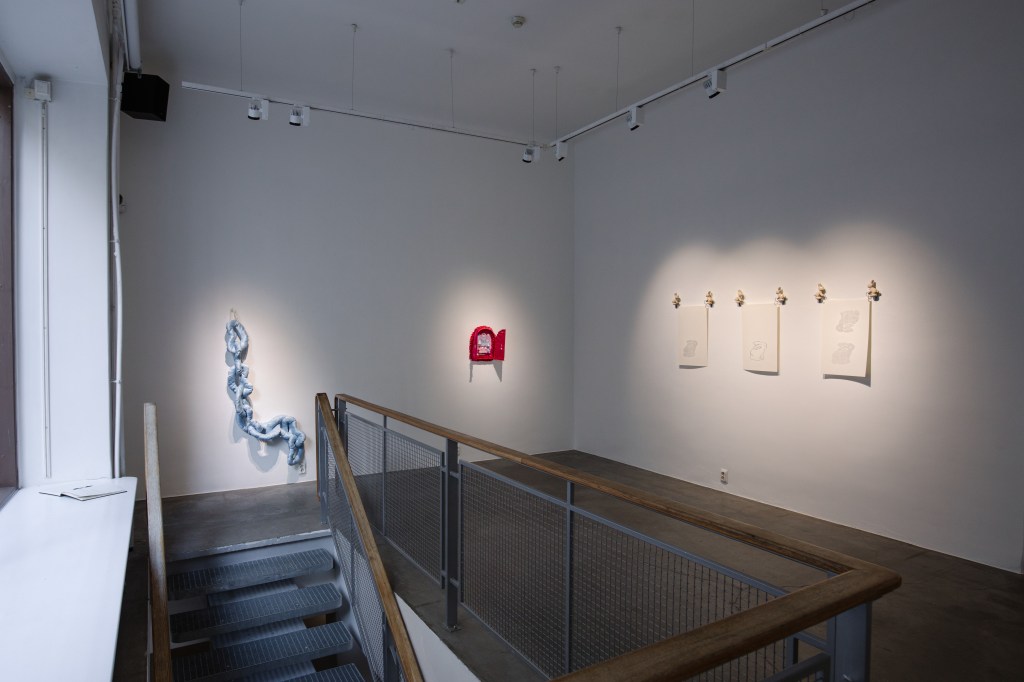
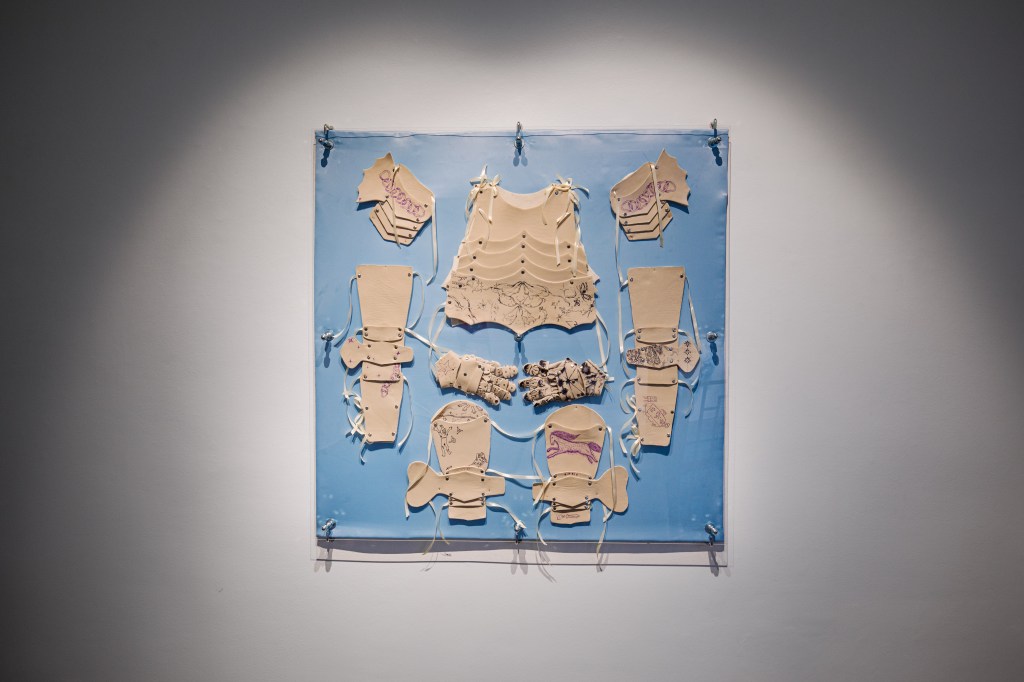
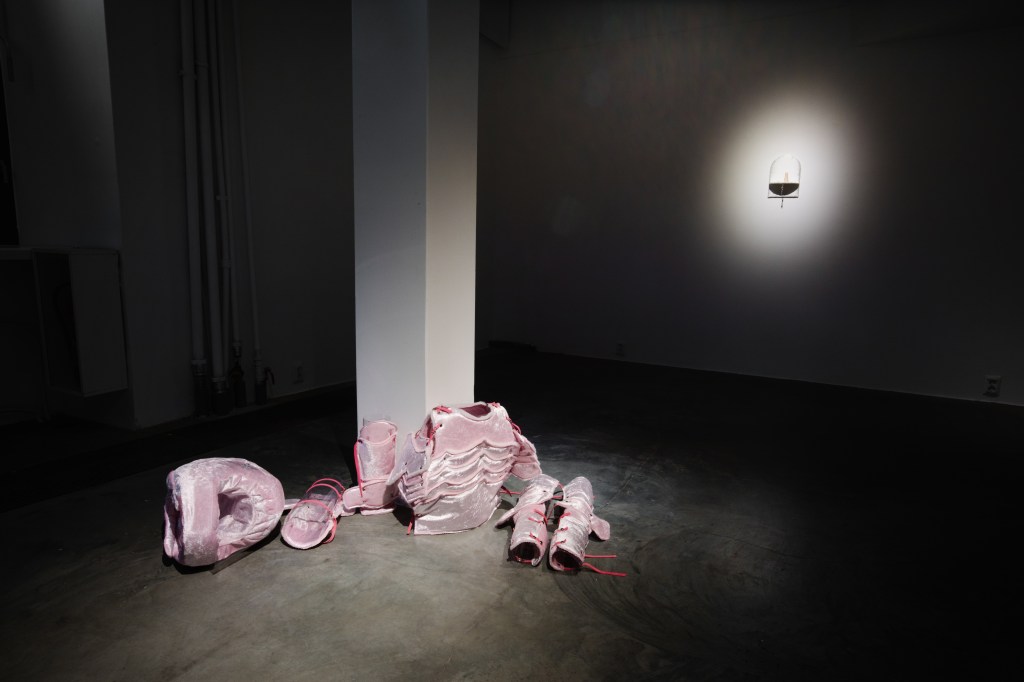
-Prince Charming’s Armour
Textile, plexiglass, tattoo ink, pen ink
120×120cm
The artwork was made with the help of different artists: Gabriela Różańska, Kirke Mari Päll (pr0hvet), Emma Leelo Dillon (placentat_tat), Susanna Mett, Saara Lotta Linno, Nadya Tjuška, Kat
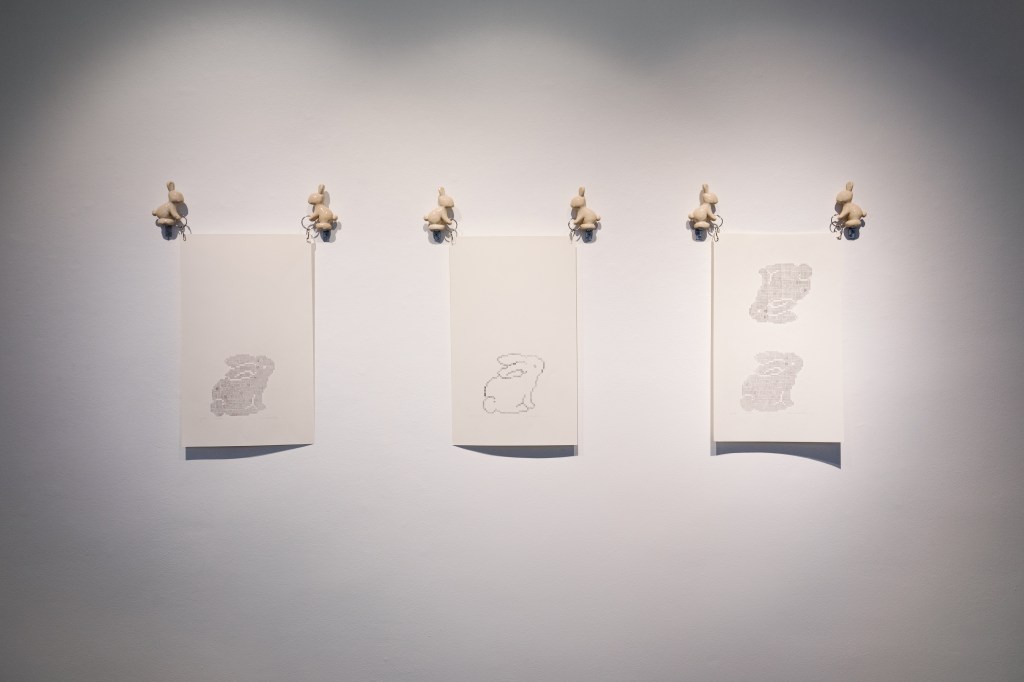
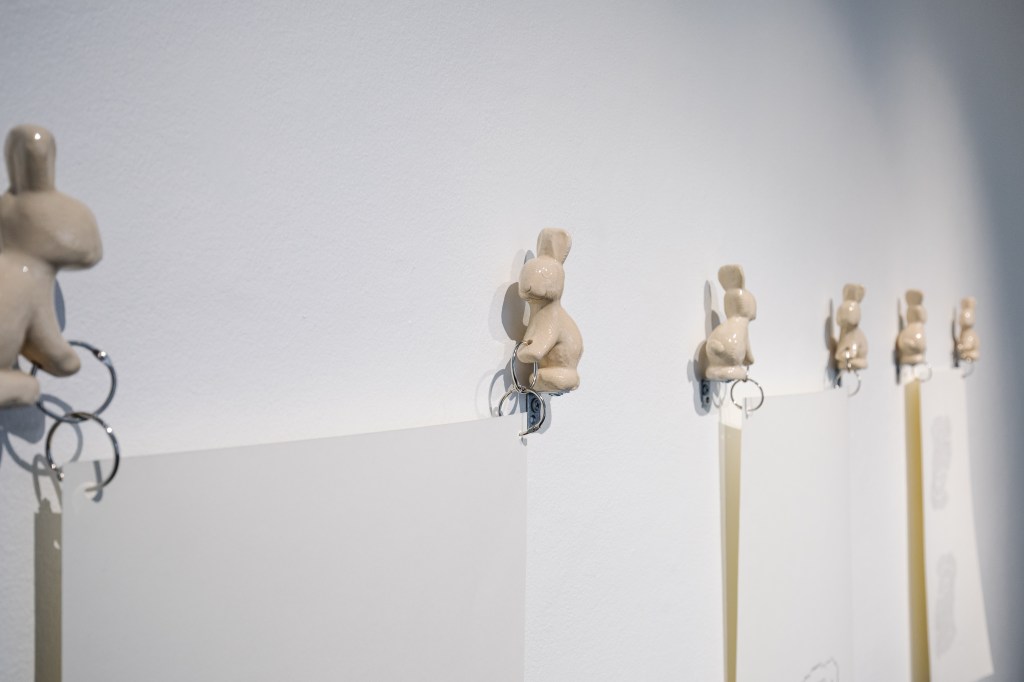
-Hares I, Hares II, Hares III
Letterpress
59,4×36cm
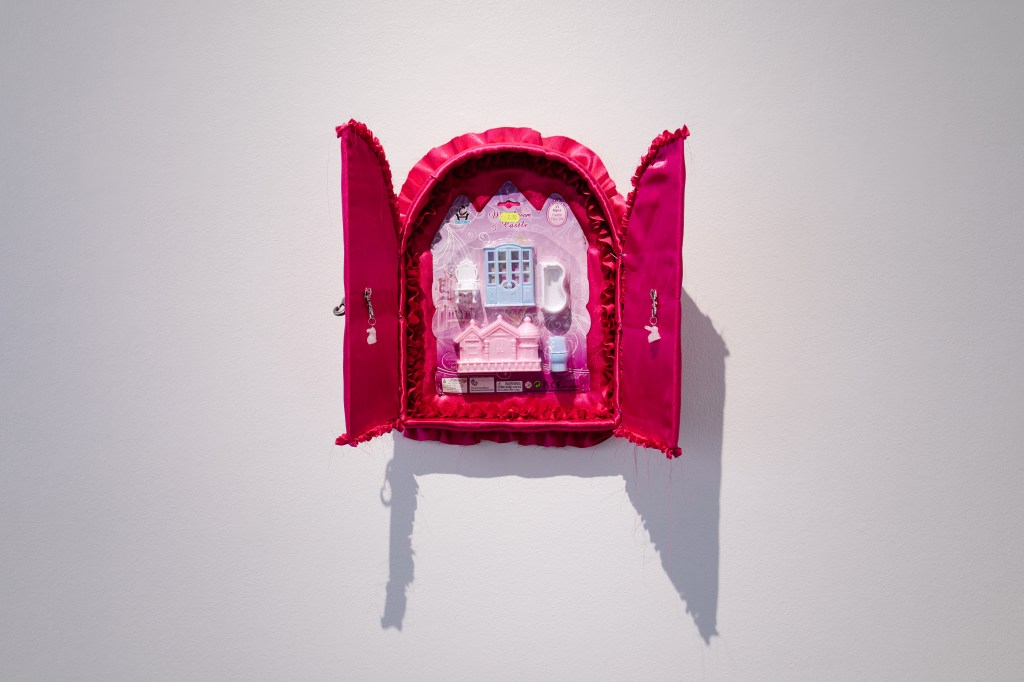
-From Nadya
Textile, foamboard, ready-made
35×28×5,5cm
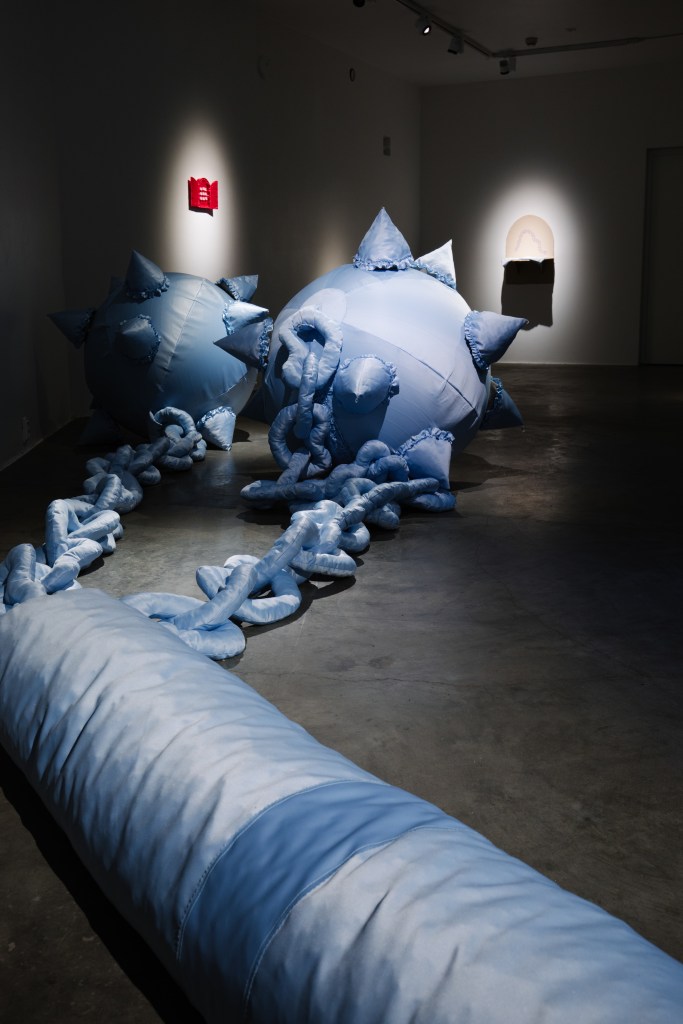
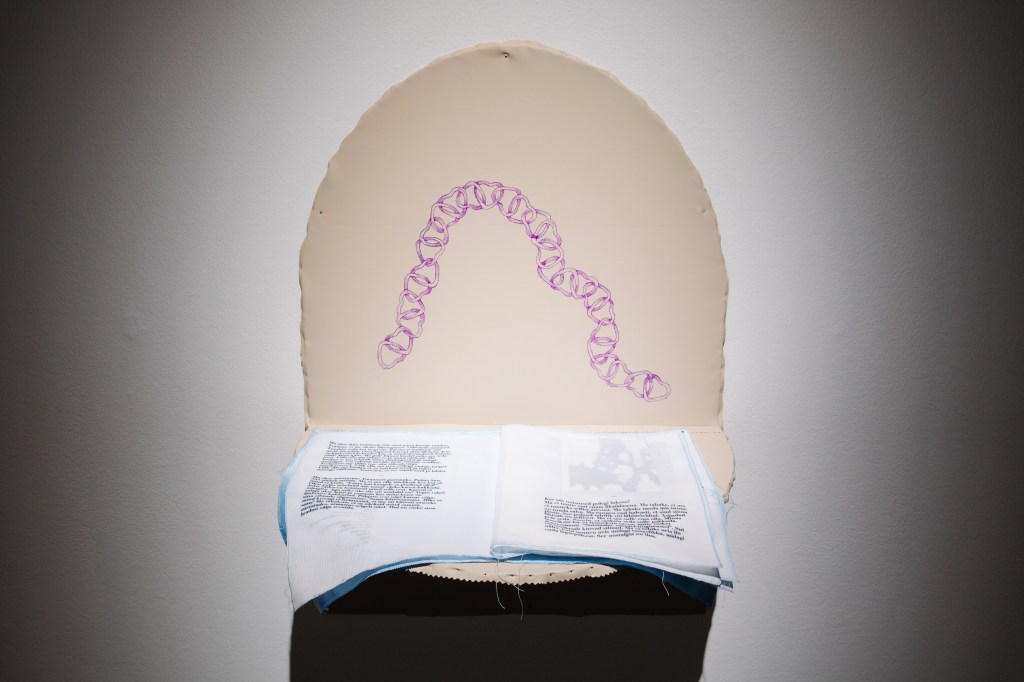
-Chain II
Textile, epoxy
170×20cm
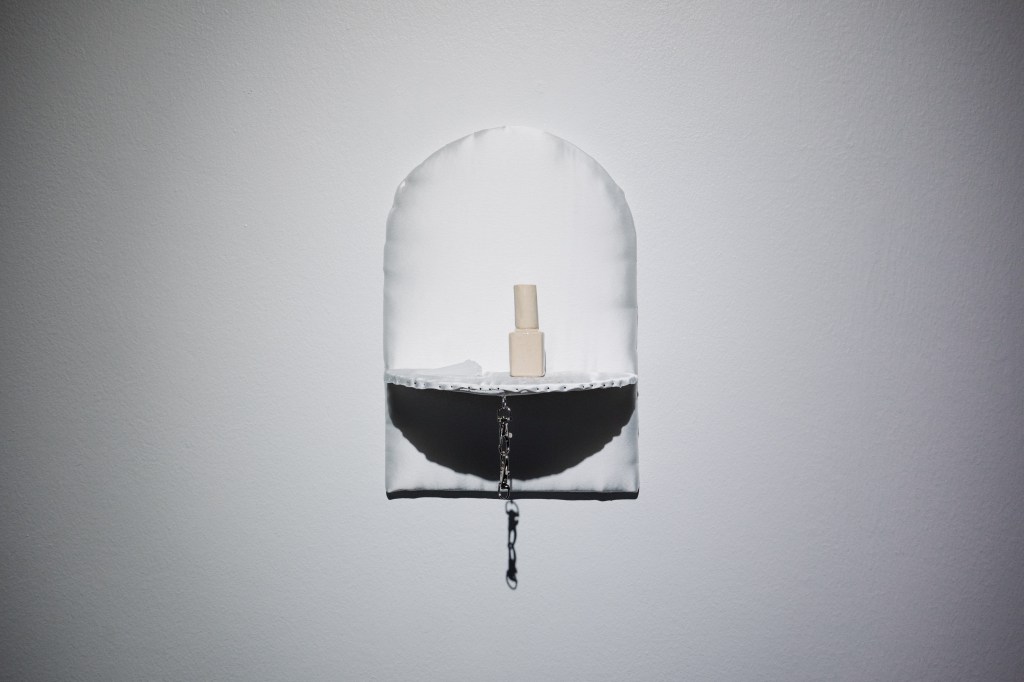
-Ode to Nails
Ceramics, nails, uv epoxy
29,5×20,5×10,5cm
-Mesimagus’ Armour
textile
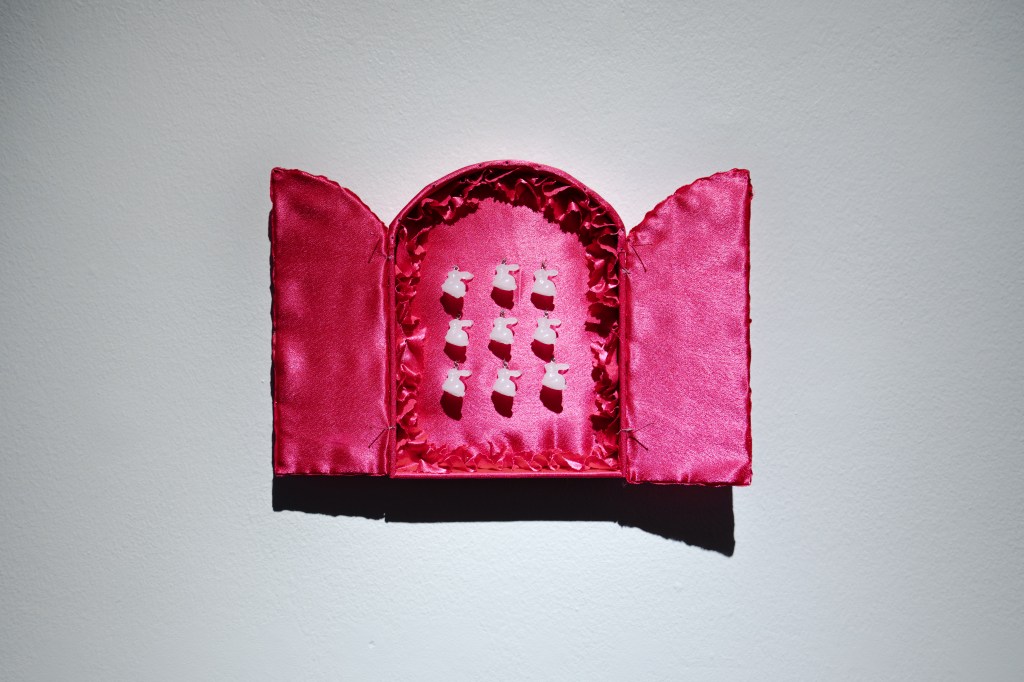
-Guards
Textile, foamboard
20,5×16×4cm
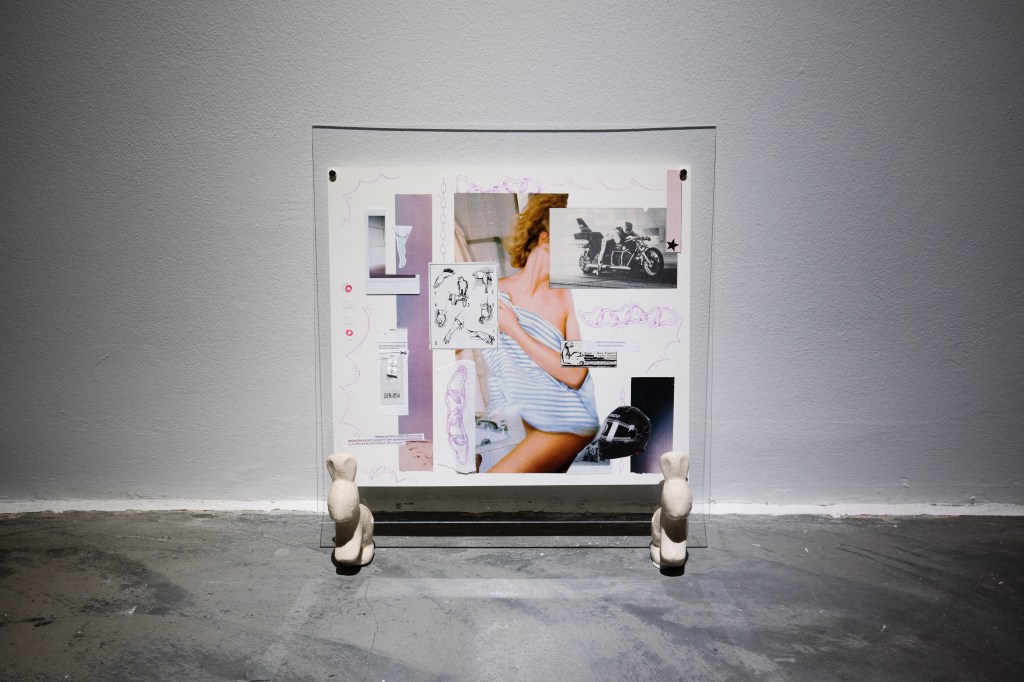
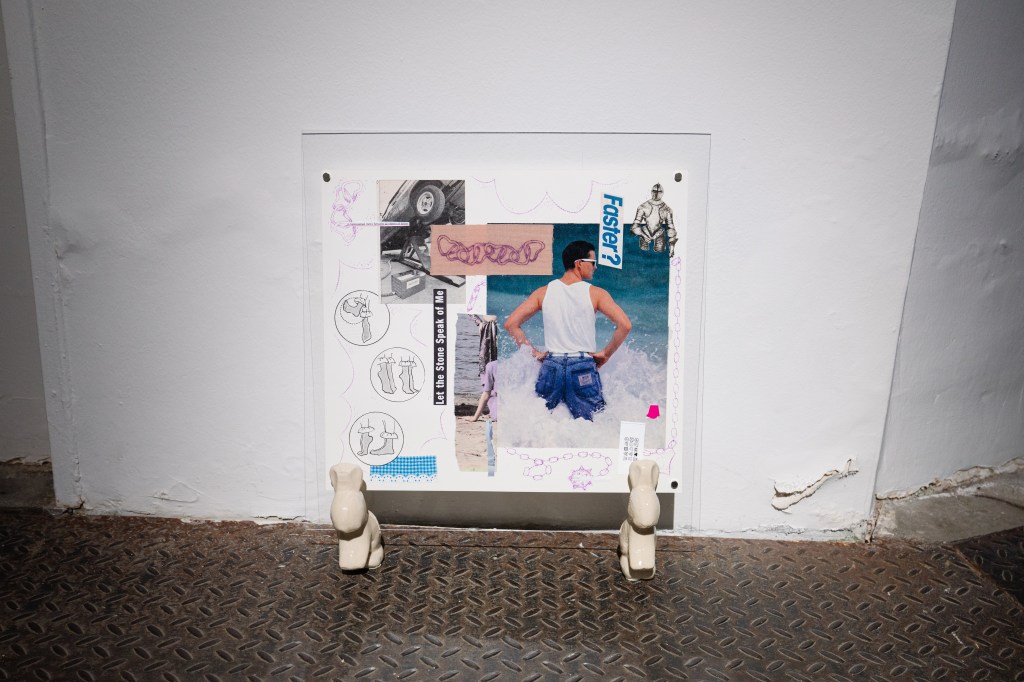
-Let the Stone Speak of Me
Collage series 2026-
32,2×36,1cm
-Hares Caress Your Hair
Artist’s book edition of 3
Textile print
28×22cm
Photos by Jane Treima
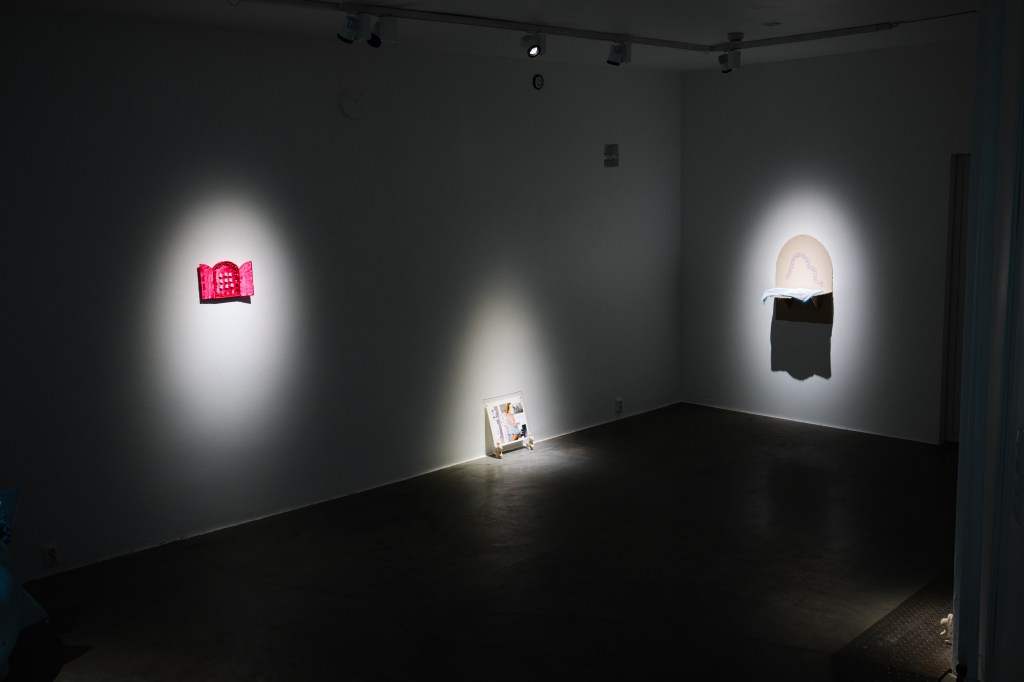
12.02-08.03.2026 Hobusepea gallery, Tallinn
One Hare caresses my head.
It plays gently with my curls.
Its paw lands softly on my cheek.
I breathe a sigh of relief.
I can’t close my eyes; everything can change so quickly.
Another hare tends and licks my crimson scars.
Hares Caress Your Hair observes the process of bodies recovering from trauma and violence and how minorities are forced to create safety for themselves in their own bodies, homes and fragile communites at a time when shared spaces are increasingly disappearing or being appropriated.
Lehtsaar delves into lesbian representation through the working class and nonbinary gaze, elevating visual symbols and semiotics to bring visibility to the local culture, which is oversaturated with a binary and heteronormative narrative of love and belonging. Their work offers a delicate, radical emphasis to inner security and collective and personal patron saints at a time when there is a rise in right-wing extremism in society, when we are experiencing the long-term consequences of chronic illnesses, epidemics, wars and other traumas.
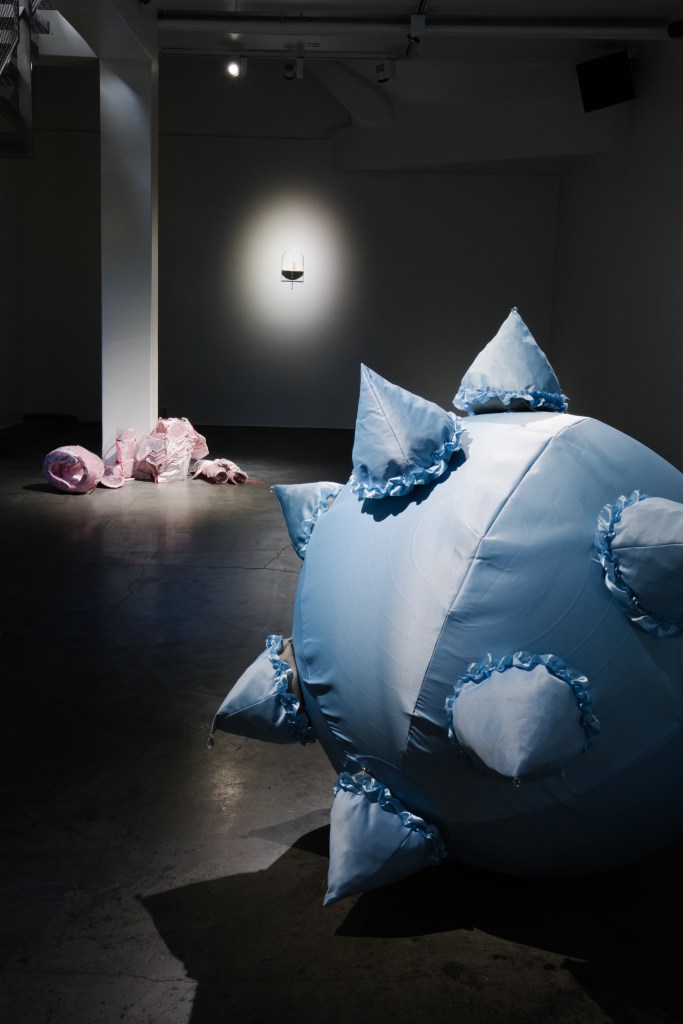
Hares Caress Your Hair is a rite that recognises security as something we must consciously maintain and work on. The space of the Hobusepea Gallery in the Old Town frames the visual language of the exhibition: altars, armours and morning stars are reminiscent of medieval power structures, but are transformed into tools through satin surfaces, sotness and transcolours. Familiar objects become vulnerable, reflecting the resilience of the queer resistance. Mixed media textile installations, collages, poetry and graphics function as honest gestures toward the pluralism and diversity of marginalised bodies, amplified symbols that protect and shield minorites from threatening forces.
Text by Nadya Tjuška